Theurgy in Late Antiquity: The Invention of a Ritual Tradition is an important text, because, in the words of the author:
“The study of theurgy has been dominated by the question of irrationality versus rationality. Theurgy has been viewed as the intrusion of extra-rational elements coming from a separate religion into the rational pursuit of late antique philosophy, thus affecting its rational character.”
This has been an often overlooked but important consideration, since many of the past scholars (like E. R. Dodds who dismissed it entirely as nothing but irrational superstition instead of the application of proper practical understanding) heavily influenced decades of academic thought towards regarding theurgy as inferior to dialectical aspects of Platonic and Neoplatonic philosophy.
Of course, anyone who has directly experienced the phenomena that are proper to an effective theurgy practice knows this to be utterly unfounded.
There has begun a shift among certain academics that now recognize this and have made concerted effort to reframe theurgy in the light that it deserves.
Ilinca Tanaseanu-Döbler is one such author who has contributed value to that end.
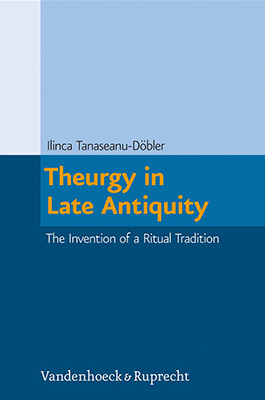
This particular text, however, is pricey and is not as layman-friendly as some other texts. In most instances the author uses the Greek words without English transliteration in the text, and in those instances I have added transliterations in parentheses in the excerpts.
There may be a few instances where the diacritical marks in the Greek transcriptions may not be perfect, because the original font used in the publication makes it difficult to discern things in a few instances, and there are marks that are not in my current character map (for some reason). As I find them, I will edit them.
Due to the length of the text, and the transliterations, this text will be covered in two separate posts.
The edition I have is hardcover, and I have no idea if there will be other printings. You can purchase one on Amazon.1
Anthologies are curated excerpts from texts I have in my library (Ex Libris) that are part of my ongoing personal research process which focuses heavily on practical aspects of theurgy and the illuminatory process of initiatory traditions in the Divine Mysteries.
I share them (protectively) to provide transparency to my students and subscribers for references I use in my work and to encourage those keenly interested to purchase the full text in support of the authors and publishers.
For those that have been with me for a while, and are familiar with how I refer to ‘quickenings’ and ‘crystallizations’ from practicing Illuminatory Seership as a prerequisite of our particular Initiatory Theurgy process, and ongoing discussions that pertain to theurgical systems, some of this should sound familiar.
From the Text, Theurgy in Late Antiquity: The Invention of a Ritual Tradition…
This book aims to disentangle the different threads that run together under the label of “theurgy”, focusing on its actual ritual dimension and trying to analyse its historical development in pagan sources from the Chaldean Oracles to the sixth century AD. (p. 11)
Iamblichus’ contribution lies not in propounding specific rituals, but in developing a theoretical frame, a ritual techne and episteme that is not tied to different traditions but transcends them and provides an esoteric expertise applicable in principle to the correct understanding and performance of every cultic act. (p. 102)
Iamblichus can be said to further systematise the Plotinian ontology. (p. 103)
The proximity of philosophy and religious observance is important, as is the stress laid by Iamblichus on Pythagoras’ knowledge: cult is the reflection of knowledge about the structure of the cosmos, the gods and the soul. (p. 115)
Full access to Ex Libris (Anthologies) posts is restricted to logged in users with an active Aethyrworld Membership.
Excerpts Continued:
Excerpted from:
Tanaseanu-Döbler, Ilinca , Theurgy in Late Antiquity: The Invention of a Ritual Tradition, Vandenhoeck & Ruprecht, 2013
Note: Any bracketed text is my notation.
Footnotes:
- Amazon links may be affiliate links. ↩︎